Flexible film
Coding on flow-wrap, laminates and pouches, at speeds where the web never stops.
Why film is unforgiving
Flexible packaging runs fast. On a flow-wrapper the film moves continuously, and the coding window is measured in fractions of a second. Anything that has to touch the pack to mark it — a hot foil coder, a roller — becomes the slowest part of the line and the part that jams.
The surface is the second problem. Most films are smooth and non-absorbent, and many carry a slip additive to help them run. Ink has to bond to that, not bead up on it.
Contrast is the third. A printed laminate is already busy. A code has to land somewhere it can be read, which usually means a reserved clear window or a white panel that the pack designer has to plan for.
What fits
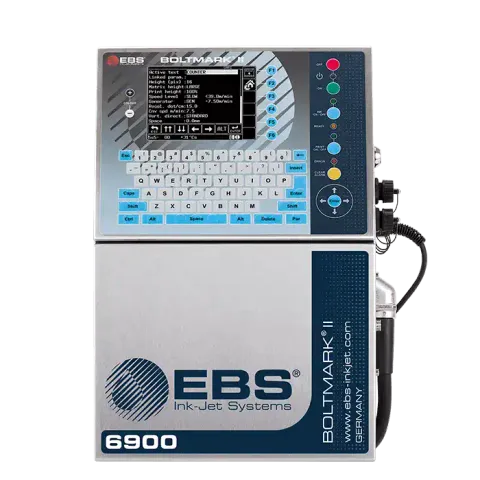
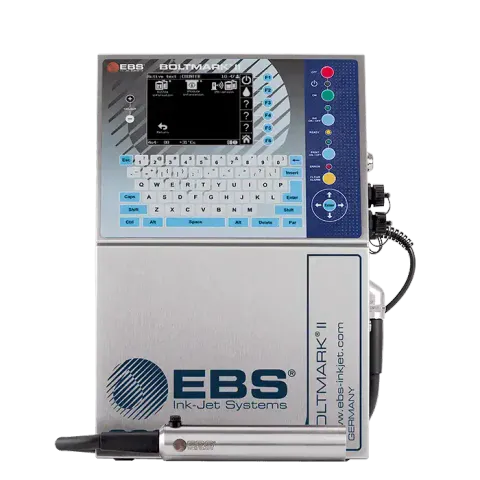
Continuous inkjet handles film well because it never touches the web and keeps pace with line speed. It is the default for date and lot coding on flow-wrap, sachets and pouches.
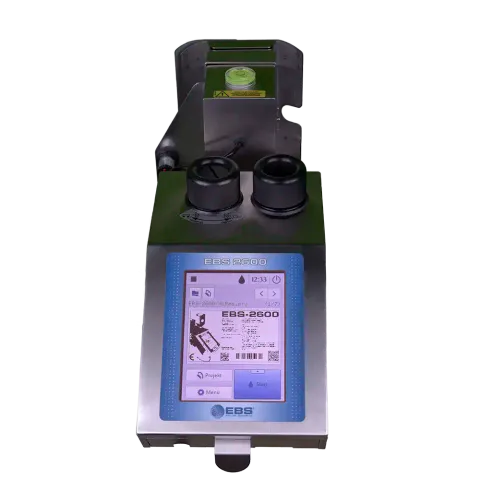
Where the code needs to be more than text — a full barcode, a QR code that a consumer will scan, a small logo — resolution matters more than raw speed, and a high-resolution system is the better fit.
Ink choice is not a detail here. A fast-drying, strongly adhesive formulation is what makes the difference between a code that survives handling and one that rubs off in the case.
What to decide before you buy
What is the actual line speed, in metres per minute, at full production and not at the machine’s rating?
Is there a clear or white area reserved for the code, or does it have to print onto printed film?
Does the pack get handled, stacked or frozen after coding? Each of those changes the ink.
Related: PET and rigid plastic faces similar adhesion questions on a different surface.