PET and rigid plastic
Marking bottles, trays and containers where the surface is smooth and the pack is often chilled.
The adhesion problem
PET, PE and PP are smooth, non-porous and chemically stable — which is exactly what you want from packaging and exactly what makes it hard to mark. There is no fibre for ink to key into. The bond is entirely a matter of the ink formulation matching the polymer.
Chilled containers add condensation, and condensation lifts ink off the surface before it has set.
Recycled content is worth mentioning too. rPET behaves slightly differently from virgin PET, and a code that has been stable for years can start failing after a resin change.
What fits
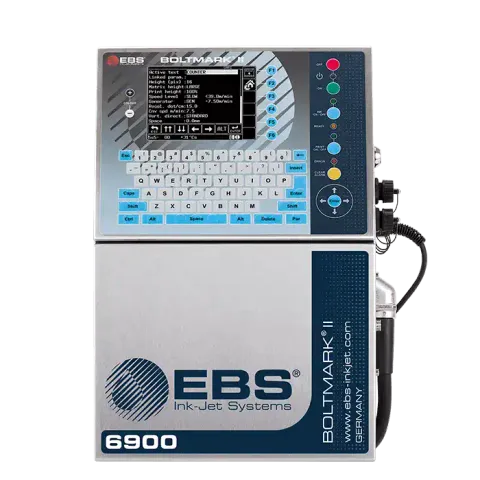
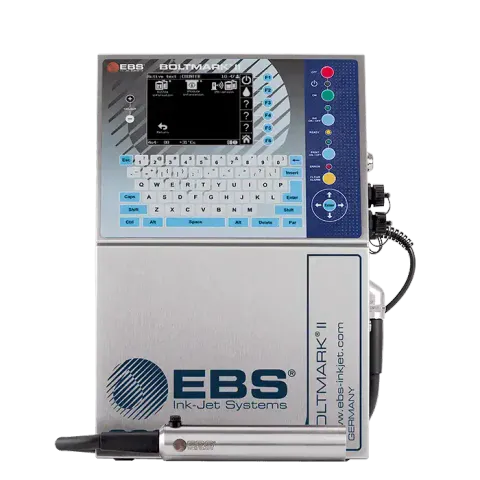
Continuous inkjet is the usual choice for date and lot coding on PET. It is non-contact, fast enough for filling-line speeds, and there are ink formulations developed specifically for polymer surfaces.
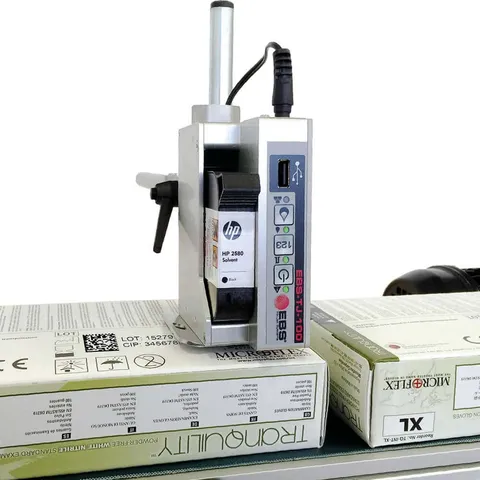
Where the mark is small but detailed — a data matrix on a cosmetics container, a legible barcode on a tray — a thermal inkjet system delivers the resolution that a small character coder cannot.
What to decide before you buy
Which polymer, and has the resin specification changed recently?
Is the container chilled or condensating at the point of coding?
Text only, or a scannable code? That decides the technology before anything else does.
Ask for an ink trial on your actual containers rather than on a sample. Adhesion on plastic is specific enough that a general answer is not worth much.
Related: flexible film covers the same adhesion questions on a moving web.