Metal
Marking cans, sheet, tube and components — from a printed date to a permanent traceability mark.
Two different jobs
Marking metal splits into two requirements that have almost nothing in common, and getting them confused is the most common mistake.
The first is coding: a date, a lot number, a batch reference printed onto a can, a lid or a coil. It has to be legible, it has to survive handling, and it does not need to outlive the product.
The second is permanent traceability: a part number, a serial, a heat number on a component or a structural element. It has to survive machining, heat treatment, paint, weather and years of service. Ink cannot do that.
What fits
For coding, continuous inkjet works on metal as it does on glass — non-contact, fast, and available in inks formulated for oily or coated surfaces. On a dark or reflective finish, pigmented ink gives the contrast that dye ink will not.
For large characters on sheet, plate or profile, a large-character system covers the size a workshop code needs.
For marking that is not on a production line at all — a component in a yard, a structural element already in place, a coil that cannot be moved — a handheld printer removes the fixed installation from the equation.
What to decide before you buy
Is the mark temporary or permanent? This is the first question and it changes everything.
Is the surface clean, oily, galvanised or painted?
Does the part move past a station, or does the station have to go to the part?
Related: metalworking covers this from the process side.
Recommended printers
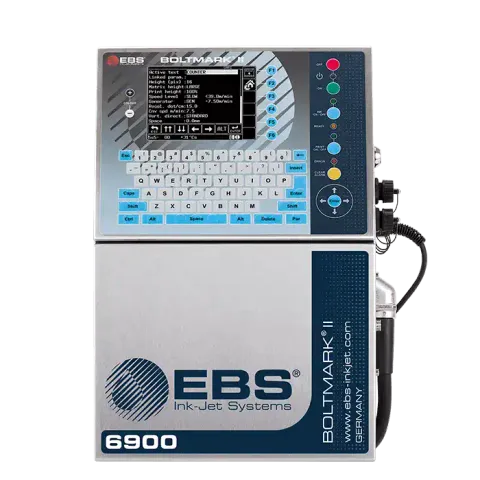
EBS-6900
Continuous inkjet coding for fast lines, with the full option set.
Handjet EBS-260
Handheld inkjet printer with text, graphics and 1D/2D barcodes, up to 16 hours cordless.
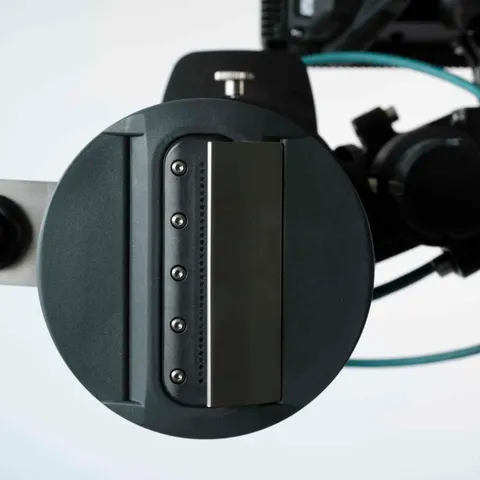
EBS-1600
Large-character drop-on-demand printer with self-pressurised, tool-free cartridges.