Food and beverage
Date and lot marking on prepacked food and drink, where the requirement is legal and the line never waits.
What the law asks for
Prepacked food sold in the EU has to carry a date of minimum durability or a use-by date, under Regulation (EU) No 1169/2011 on food information to consumers. Separately, Directive 2011/91/EU requires a lot marking that identifies the batch.
Neither of these is optional, and neither is satisfied by a code that has smudged. In practice the requirement is not “print a date” — it is “print a date that is still legible when an inspector or a consumer looks at it at the end of shelf life”.
What makes it hard in production
Food lines run fast and they run wet. Packs arrive chilled, condensating, sometimes greasy. Washdown is routine, and equipment that cannot take a hose is equipment that fails.
The variety of surfaces on a single site is the other issue. A dairy might code film lids, PET bottles, cartons and outer cases in the same building. Those are four different marking problems, and a supplier who only solves one of them leaves you managing three relationships.
What usually fits
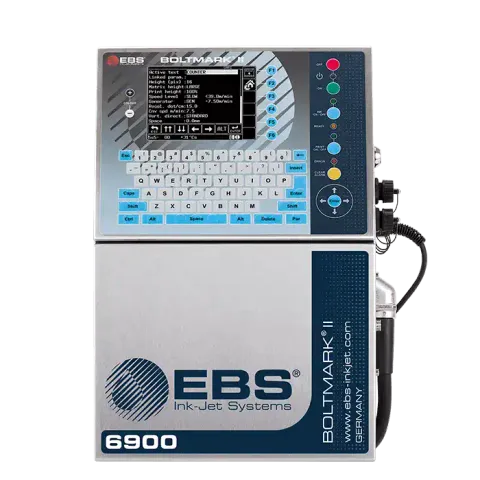
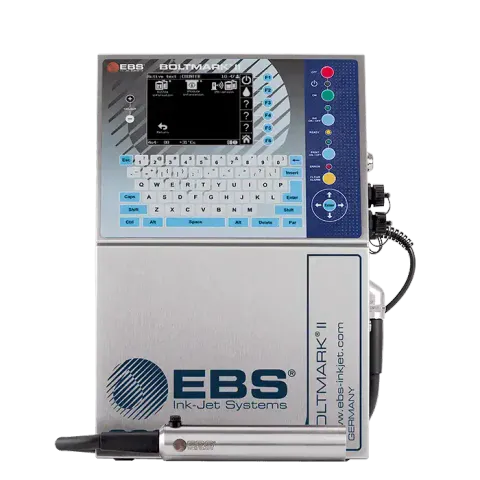
Continuous inkjet covers the majority: dates and lot codes on film, PET and glass, at line speed, without touching the pack. Look for an IP65 housing where washdown is part of the routine, and confirm that food-grade ink is available for the application.
For outer cases the answer changes to a large-character system.
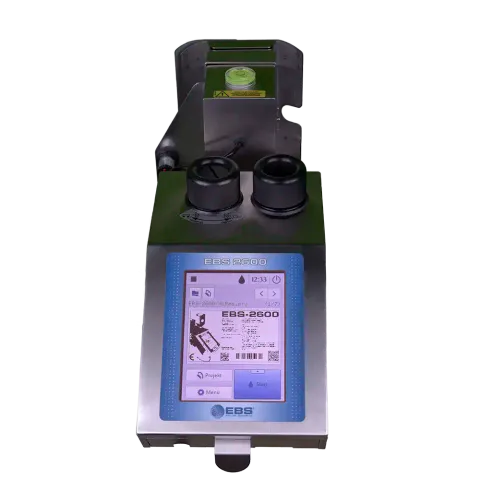
Where the code has to be scanned — GS1 barcodes, batch traceability across a supply chain — resolution takes priority over speed.
Questions worth answering before you specify
How many pack formats will the same coder have to handle?
Is the coding position before or after any wet process?
Does the code need to be human-readable only, or machine-readable as well?