Glass
Coding on bottles and jars, where the surface is cold, often wet, and the product is round.
Why glass is difficult
Glass gives you almost nothing to hold on to. The surface is non-porous, so ink cannot soak in — it has to dry on top and bond there. Bottles arrive at the coding station cold from filling, and cold glass carries condensation. Ink that lands on a film of water will smear at the first touch.
The shape works against you too. A round bottle presents a moving, curved surface, and the distance between the printhead and the glass changes as the bottle turns. A code that is sharp at the centre goes soft at the edges.
Then the pack goes through a washer, a pasteuriser, or an ice bucket, and the code has to still be there.
What fits
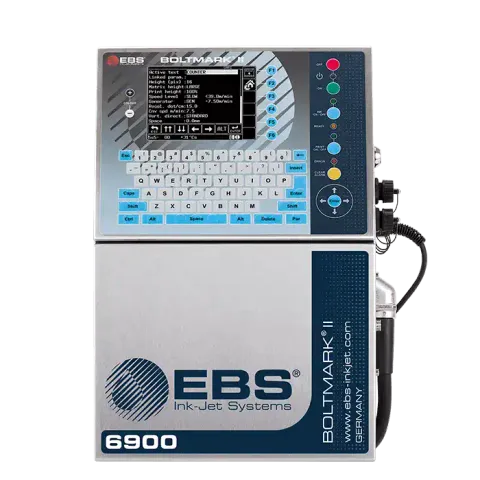
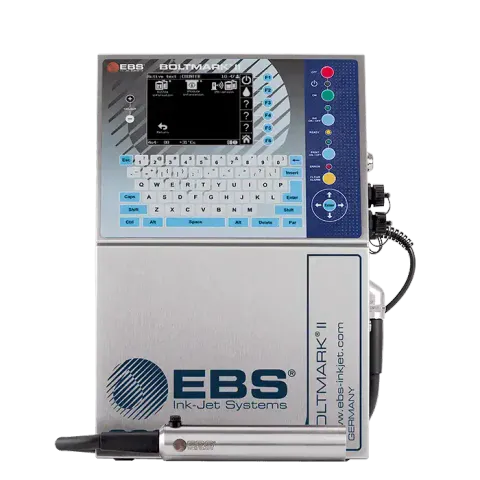
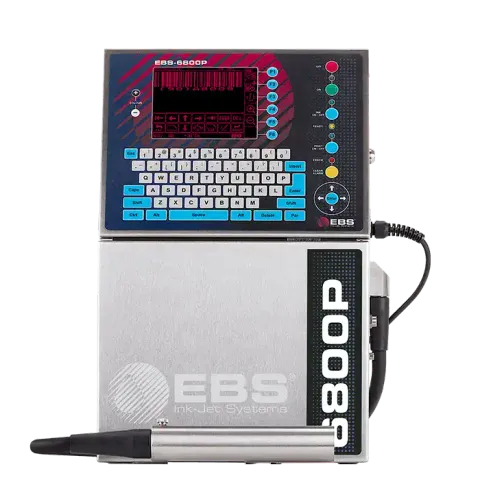
Continuous inkjet is the standard answer. It marks without touching the bottle, tolerates a variable throw distance, and keeps up with filling-line speeds. The choice between models comes down to how many lines of text you need and how fast the line runs.
Where the glass is dark — a wine or beer bottle — a dye ink disappears. That is the case for pigmented ink, which sits opaque on top of the glass instead of tinting it.
What to decide before you buy
How many lines of code do you need? A date alone is one line. Date plus lot plus a 2D code is three or more, and that changes which model fits.
Is the glass clear or dark? This decides the ink, and the ink decides the machine.
Does the bottle get wet after coding? If it passes through a pasteuriser or a washer, say so when you ask for a quote — the ink specification changes completely.
For dark glass and high-contrast marks, see the pigmented-ink option. For a full picture of what the code has to survive, the wine and spirits page covers the same ground from the production side.